Low carb substitutes are the whole game once you cut the starch. Almost nothing about low-carb cooking is about going without; it is about knowing what to reach for instead, and what that swap costs you in net carbs. This guide is my master matrix of the swaps I actually use, with the carb count for each and a worked guide behind every one. Start with the table, then read the notes on the swaps that need a little technique to get right.
Low Carb Substitutes: The Keto Swap Guide
The low carb substitutes matrix
Net carbs come from USDA data and product labels, rounded, so read them as close estimates. Each row links to the recipe or guide where I put the swap to work.
| What you're replacing | Low-carb swap | Net carbs | My guide |
|---|---|---|---|
| Wheat flour or breading | Ground nuts, pork rinds, or parmesan crisps | about 0 to 3 g | cooking with nuts |
| Crackers | Whole walnuts | about 2 g per oz | cracker alternatives |
| Flour or cornstarch thickener | Cream cheese or xanthan gum | about 0 to 1 g | low carb thickeners |
| Spaghetti | Zucchini noodles | about 3 g per cup | zucchini spaghetti |
| Lasagna noodles | Zucchini slices | about 3 g per cup | zucchini lasagna |
| Rice or mashed potato | Cauliflower | about 3 g per cup | cauliflower mash |
| Sugar | Erythritol or monk fruit | about 0 g | See the sugar and milk notes below |
| Milk in a dressing | Heavy cream plus water | cuts the milk sugar | low carb ranch |
Flour and breading: nuts, pork rinds, parmesan
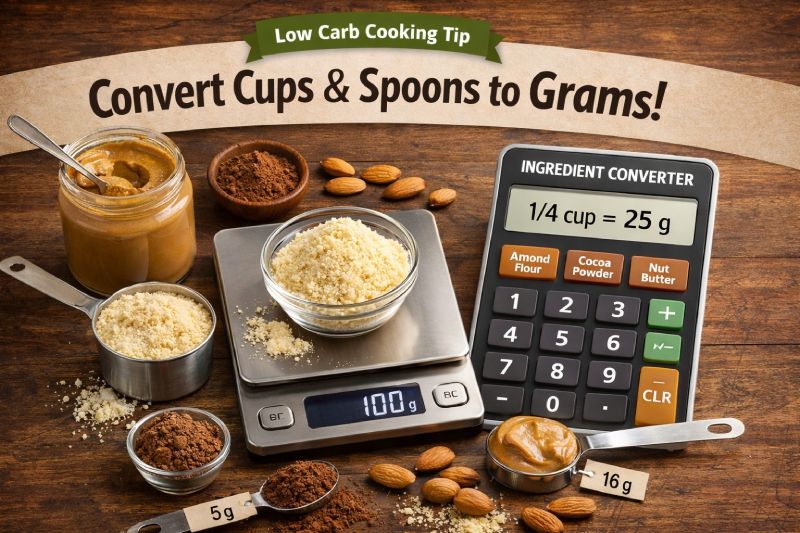
For a crispy coating, my go-to swaps are ground nuts, crushed pork rinds, and grated parmesan, and which one I reach for depends on the dish. Pork rinds give the closest thing to a crunchy fried crust at zero carbs, parmesan bakes into a savory shell, and ground nuts bring a richer, sweeter bite that suits chicken and fish. Nuts come with one warning that trips people up: they have far more fat than flour and scorch faster, so keep the heat moderate and pull them before they look fully done. For more ways to cook with them, my guide to cooking with nuts runs through it. Baking is a different story. Almond and coconut flour do not behave like wheat at all, and they do not weigh the same per cup, so swapping by volume is how a recipe ends up dense or dry. Weigh them in grams instead, which my cups to grams guide walks through.
Crackers and thickeners
The cracker is the easiest swap of all. A whole walnut is firm, scoops like a chip, and runs about 2 grams of net carbs an ounce, so it carries soft cheese and dips with none of the grain, which is the whole case I make in my cracker alternatives guide. Thickening takes a touch more care. Cream cheese is the one I reach for in cream soups and gravies, since it adds body and tang at about a gram of carbs a tablespoon, while a pinch of xanthan gum handles thinner sauces. The catch with xanthan is real: it clumps the instant it hits liquid and turns slimy if you overdo it, so add it 1/8 teaspoon at a time. The French solved this long before either, by thickening with no thickener at all, simmering a sauce down to reduce it or finishing it with a swirl of cream or cold butter, a move they call monter au beurre. European keto cooks tend to pick glucomannan over xanthan for hot sauces for the same slime reason. My thickener guide sorts all of them by use.
Pasta and rice: zucchini and cauliflower
Vegetables stand in for the two biggest starches, and Mediterranean home cooks were doing this with zucchini and cauliflower long before anyone called it keto. Zucchini noodles replace spaghetti at about 3 grams of net carbs a cup, and sliced thin they layer into a zucchini lasagna or twirl as zucchini spaghetti. Cauliflower covers both rice and mashed potato at a similar 3 grams a cup, whether you grate it into rice or mash it alongside a roast like my marinated pork loin, and it crisps into snacks like cauliflower popcorn. Both vegetables share one failure that keto eaters run into again and again: water. Zucchini weeps and cauliflower rice steams itself soggy. The fix is the same for both. Salt the cut vegetable, let it drain for ten minutes, pat or squeeze it dry, then cook it hot and fast or dry-roast it so the moisture leaves instead of pooling.
Sugar and milk
Sugar comes out cleanly. Erythritol and monk fruit both land at 0 net carbs and stand in for sugar in most cooking, though you measure them for sweetness rather than weight, since some blends are sweeter spoon for spoon. Milk is the quieter swap. The milk a recipe calls for carries the sugar, so trading it for heavy cream cut with a little water keeps the richness while dropping the carbs, which is exactly the move behind my low carb ranch: cream and water in place of the cup of milk, and the dressing lands near a gram of net carbs a serving.
Sources
USDA FoodData Central, nutrient references for zucchini, cauliflower, walnuts, almonds, and cream cheese.
Carb Manager and Sure Keto, net carb data for zucchini noodles, cauliflower rice, and xanthan gum, 2026.
Diet Doctor and keto cooking guides, low carb thickening and swap techniques, 2026.
Frequently asked questions
What can I use instead of flour on a low carb diet?
For breading, ground nuts, crushed pork rinds, or grated parmesan all crisp up well, running from 0 to about 3 grams of net carbs depending on which you pick. For baking, almond and coconut flour are the usual swaps, though they behave nothing like wheat, so follow a recipe written for them.
What is the best pasta substitute for keto?
Zucchini noodles, at about 3 grams of net carbs a cup. The trick is keeping them from going watery: salt the strands, let them drain for ten minutes, pat them dry, and cook them hot and fast.
How do I replace rice on keto?
Cauliflower rice, at about 3 grams of net carbs a cup, is the standard. Grate or process a head into rice-sized bits, then dry-roast or saute it rather than steaming, which keeps it from turning to mush.
What thickens a sauce instead of flour or cornstarch?
A spoonful of cream cheese for cream sauces and gravies, or a tiny pinch of xanthan gum for thinner sauces. Both add almost no carbs. Add xanthan 1/8 teaspoon at a time, since too much turns slimy.
What sugar substitute is best for keto?
Erythritol and monk fruit are the most reliable, both at 0 net carbs. Measure them for sweetness rather than weight, since some blends are sweeter than sugar cup for cup.
Why is my zucchini pasta watery?
Zucchini is mostly water and weeps as it cooks. Salt the noodles, let them sit ten minutes, squeeze or pat them dry, then cook them quickly over high heat and sauce them right before serving.