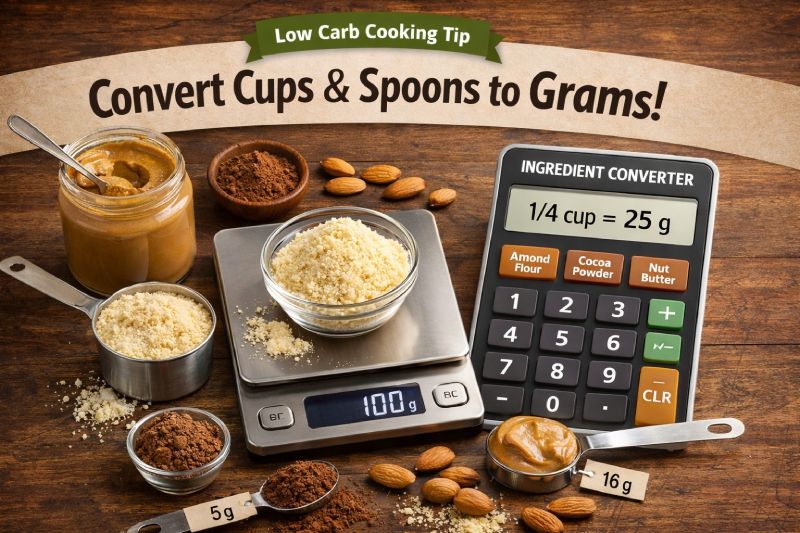
Low carb baking conversions are where keto recipes quietly go wrong, because almond flour, coconut flour, and the sugar substitutes weigh nothing like the wheat and sugar a US cup measure assumes. Grams fix that. Weighing ingredients gives you the same texture every time, which matters most in cream-based treats like Cheesecake Mousse, and even more with the nut and coconut flours from my low carb substitutes guide, where a packed cup can throw the whole bake off.
The fastest fix is an ingredient-based cooking measurement converter that estimates grams from what you are measuring, since flour, sugar, and butter each land at a different weight per cup.
Volume-to-weight conversions depend on ingredient density and how you fill the cup (packed vs leveled).
A cup measures volume, not weight. A cup of flour and a cup of sugar weigh very differently, and even the same ingredient shifts with brand, humidity, and whether you scoop-and-pack or spoon-and-level. The numbers below are practical averages, good for everyday baking, and every one is an estimate rather than a lab figure.
Quick baking chart: the most common conversions (approximate)
Use this as a fast reference. For exact custom amounts (like 0.5 cup, 1.5 cups, 3 tbsp), use the calculator links.
Tip: butter is a perfect spoon ingredient. A tablespoon is roughly 14 grams, so it is easy to scale recipes without guessing.
Keto flours and sweeteners (approximate)
These are the weights the big baking charts leave out, and the ones that decide whether a low carb bake works. Treat them as brand-dependent estimates and weigh when you can.
Swapping a keto flour cup for cup is the single most common reason a low carb bake comes out dense, dry, or greasy. Almond flour is heavier and far higher in fat than wheat, so a packed cup adds oil and weight that wheat never would, and it browns faster for the same reason. Coconut flour runs the opposite way. It is bone dry and drinks up roughly four times its weight in liquid, so a recipe built for wheat turns to paste if you swap it straight across. Most coconut flour recipes use a quarter to a third of the wheat amount and add extra eggs or liquid to make up the difference.
The sweeteners hide their own trap. Granular erythritol measures close to sugar by volume, but allulose, monk fruit blends, and pure extracts each pack differently, and a labeled cup can mean very different grams from one brand to the next. Weighing is the only way to keep a custard or a crust repeatable. For which swap suits which job, my low carb substitutes guide ranks them by net carbs, and the gram weights here are the measuring half of that same toolkit. Put them to work in a bake like Strawberry Cheesecake, where the almond crust lives or dies on getting the flour weight right.
Cups, tablespoons, teaspoons: what changes (and what doesn't)
Volume to weight (cups/tbsp/tsp to grams/oz): depends on ingredient density and packing.
Volume to volume (cups to ml, ml to fl oz): a fixed conversion, the same for every ingredient.
A US cup is about 236.6 ml. For volume conversion only, use cups to milliliters.
Important: oz (weight) vs fl oz (volume)
One of the most common kitchen mistakes is mixing up ounces (oz) and fluid ounces (fl oz). Oz measures weight, fl oz measures volume. People converting milliliters usually mean fl oz, but sometimes they need weight, which is ingredient-based.
In recipes like Hot Chocolate, cocoa clumps and compacts in the cup. Measuring it by grams keeps flavor and texture consistent, especially when you repeat the recipe. For a quick spoon conversion, use 1 tbsp cocoa to grams.
2) Custards and cream-based desserts
For smooth textures in custards and ice cream bases like Vanilla Custard Ice Cream, weighing is the easiest way to keep batches consistent, especially when you scale up.
How to convert a recipe from cups to grams (simple workflow)
Identify the ingredient (flour, sugar, butter, cocoa, almond flour).
Pick the unit (cup, tbsp, tsp, ml).
Convert using an ingredient-based calculator for a practical gram estimate.
Write the gram values into your recipe so you never reconvert next time.
For one screen that handles all of it (cups, grams, ml, oz), open the BakeMetric converter.
Converting cups and spoons to grams is one of the highest-impact upgrades you can make for repeatable low carb baking, and it matters most with the keto flours and sweeteners that swap nothing like wheat. Start with the weights above, then reach for an ingredient-based tool whenever you cook from US recipes. Open the full converter to get started.
Sources
USDA FoodData Central, nutrient and density references for nut flours, cocoa, and flax.
King Arthur Baking ingredient weight chart, gram weights for almond flour, coconut flour, cocoa, and flax meal.
Bob's Red Mill and keto sweetener manufacturers (Swerve, allulose, and monk fruit blends), label weights and serving densities, 2026.
Aggregated ingredient density data for volume-to-weight baking conversions.
Frequently asked questions
How many grams is a cup of almond flour?
About 96 grams for fine blanched almond flour, the weight most brands land on. It is heavier and far higher in fat than wheat flour, so a packed cup adds oil and weight a recipe never planned for. Weigh it for a crust or cookie that comes out the same every time.
Why can't I swap coconut flour cup for cup?
Coconut flour is bone dry and soaks up roughly four times its weight in liquid, so a straight swap turns batter to paste. Most recipes use a quarter to a third of the wheat amount and add extra eggs or liquid. A cup runs about 112 to 128 grams depending on the brand.
Do keto sweeteners weigh the same as sugar?
Granular erythritol measures close to sugar, near 200 grams a cup. Allulose, monk fruit blends, and pure extracts each pack differently, and a labeled cup can mean very different grams from one brand to the next, so weigh them rather than trusting the scoop.
Is cups to grams exact?
Not always. It is usually an estimate, since density varies by brand, humidity, and packing method. Converting to grams still improves repeatability in baking far more than measuring by volume, especially with low carb flours.
What is the biggest mistake with flour?
Packing the cup. Scoop flour straight from the bag and compress it, and the same one cup can weigh much more than a spoon-and-level cup, which is why two bakers following one recipe get different results.
Featured in these guides
Curated low-carb guides and roundups this recipe is part of.