Keto guacamole carbs are not one number, which is why every page you land on gives a different one. The dip itself is friendly to a low-carb plate, but the count swings with your serving size and, more than anything, with what you stir in. The base below, the components shared by traditional Mexican guacamole and by low-carb recipe developers alike, runs about 3 grams of net carb a serving. Below it is the part no recipe card shows: how much carb each ingredient actually brings, worked out from USDA FoodData Central, so you can see exactly where the number comes from and which add-ins move it.
Keto guacamole carbs, ingredient by ingredient
Here is the base recipe taken apart. Net carbs are total carbohydrate minus fiber, per USDA figures, for the batch of four servings and then per serving. This is the table the recipe SERP hides, and it is where the useful decisions live.
| Ingredient | Net carbs / 100 g (USDA) | Amount in the base batch | Adds per serving |
|---|---|---|---|
| Avocado, California | 1.8 g | 2 avocados (~300 g flesh) | ~1.4 g |
| White onion | 7.6 g | 1/4 cup (~40 g) | ~0.8 g |
| Lime juice | 8.0 g | 2 tbsp (~30 g) | ~0.6 g |
| Jalapeno / serrano | 3.7 g | 1 chile (~14 g) | ~0.1 g |
| Cilantro | 0.5 g | 1/4 cup (~4 g) | ~0 g |
| Salt | 0 g | 1/2 tsp | 0 g |
| Base total | ~3 g | ||
| Add: tomato | 2.7 g | 1 medium (~120 g) | +0.8 g |
| Add: garlic | 30.9 g | 1 clove (~3 g) | +0.2 g |
The number that surprises people: the avocado is the leanest thing in the bowl by weight, at 1.8 grams of net carb per 100 grams, because most of its carbohydrate is fiber that gets subtracted back out. It only shows up as the largest single share of the serving because there is so much of it. Gram for gram the onion carries four times as much, the lime twice as much again, and gram for gram garlic is the carbiest thing in the bowl at nearly 31 grams of net carb per 100. A single clove is only about 3 grams, so it adds barely a fifth of a gram, but it is the reason a heavy hand with the aromatics matters more than the avocado ever will.
How the carbs change by version
Guacamole is a family of documented versions, not a fixed formula. The base here is the consensus core, avocado, onion, cilantro, chile, lime, and salt, the components every version shares. Tomato and garlic are the two most common documented add-ins. Stack them up and the count climbs, but stays keto until fruit or a sugary jar enters the picture.
| Version | What is in it beyond the base | Net carbs / serving |
|---|---|---|
| Documented consensus base | avocado, onion, cilantro, chile, lime, salt | about 3 g |
| Base plus tomato | one diced tomato | about 3.7 g |
| Loaded, restaurant-style | tomato, double onion, garlic | about 4.7 g |
| With fruit stirred in | 1/4 cup mango, pineapple, or pomegranate | about 5 to 6 g |
| Store-bought tub | varies by brand | about 3 to 6 g |
The base, base-plus-tomato, and loaded versions all clear the keto line of 5 grams of net carb a serving with room to spare. The fruit version and some store tubs are where a bowl of guacamole crosses from keto into merely low-carb, and it is worth knowing which side of that line your batch sits on.
The carbs ride in on the mix-ins
If a batch of guacamole reads high, look past the avocado. Fruit is the biggest lever: a quarter cup of diced mango or pineapple adds more than a gram of net carb to every serving on its own, and pomegranate arils more still, because that carbohydrate is sugar with little fiber to subtract. A spoon of jarred salsa or a scoop of store pico is next, especially the sweeter supermarket salsas that list sugar or dextrose on the label. Then the tomato, then a doubled pile of onion. Read a store tub the same way you would read a jar of sauce: if sugar or a starch thickener sits high in the ingredient list, that is where the extra carbs are hiding, not in the fruit of the avocado.
Where guacamole comes from, and the base we built on
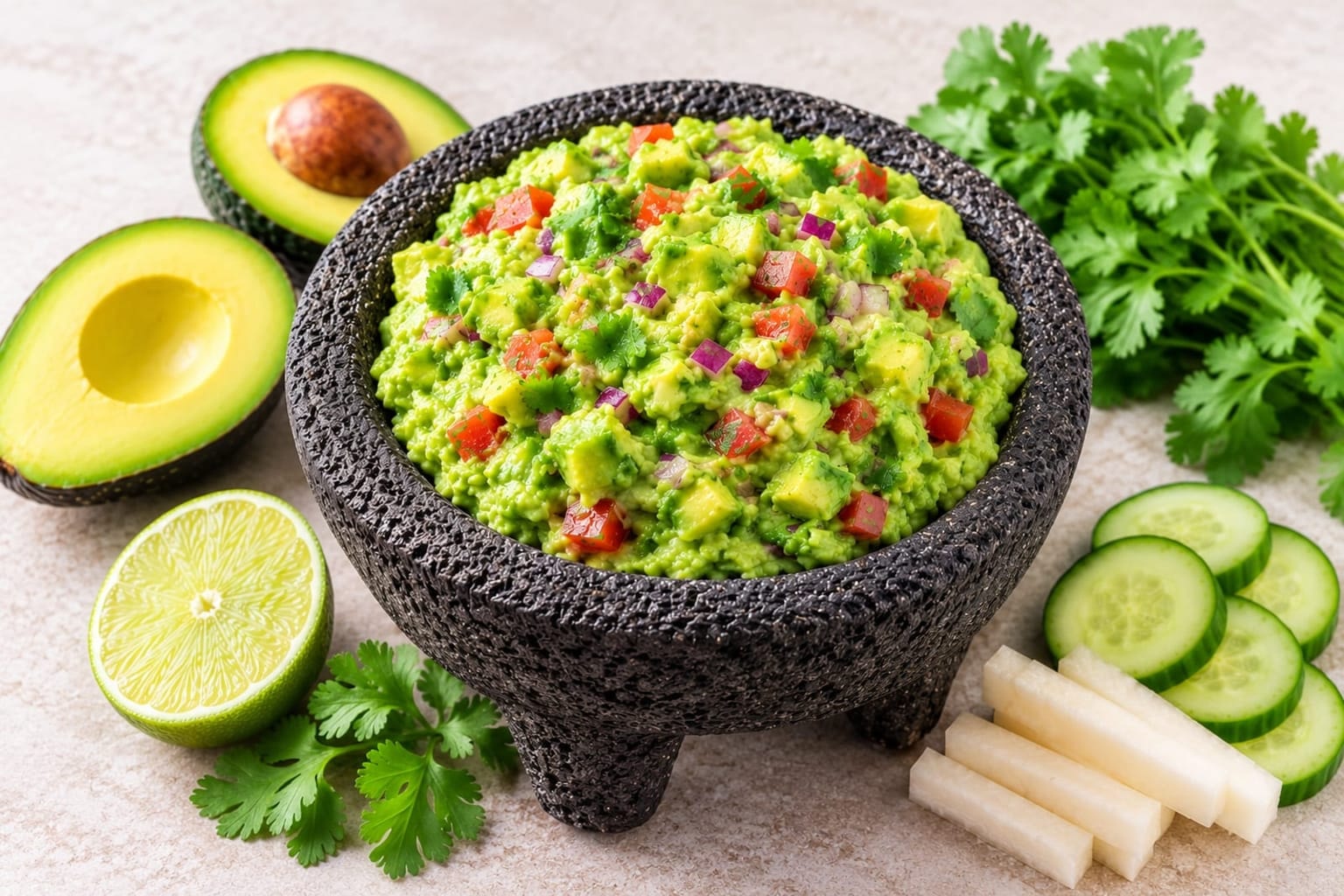
The name comes from the Nahuatl ahuacamolli, ahuacatl for avocado and molli for sauce, first written down in Spanish-Nahuatl sources later in the 1500s, though avocados had been eaten in the region for thousands of years before that. The earliest, pre-Columbian version was the simplest, avocado mashed with chile, tomato, and salt, all native to Mesoamerica. Lime, onion, cilantro, and garlic all arrived with the Spanish; over the centuries the first three settled into the traditional Mexican bowl, while garlic stayed an optional flourish, which is why it sits in the optional column above rather than the base. Traditionally the whole thing is made in a molcajete, a basalt mortar, where the onion, chile, and salt are ground to a paste before the avocado is folded in and kept chunky.
That traditional core, the components common to the documented Mexican version and to independently published keto recipes, is the base this page uses and prices out. It is one real, complete version rather than an averaged invention, chosen because every documented variant we compared is built around it. The optional tomato and garlic are the documented ways cooks depart from it, so they are shown with their own carb cost rather than baked into the number.
How to keep it green
Guacamole browns because of oxidation: an enzyme in the avocado called polyphenol oxidase reacts with oxygen and turns the surface grey-brown. It is only skin deep and still safe to eat, but nobody wants it. The fix is to cut off the air. Press a sheet of plastic wrap flat down onto the surface so there is no gap between the wrap and the dip, or float about half an inch of cold water over the top, seal the container, and pour the water off before serving. The lime juice already in the recipe helps, since its acid slows the enzyme, but on its own it only buys a little time. Sealing out the air is what keeps a batch green overnight.
What to eat it with instead of chips
The tortilla chip is the carb load, not the guacamole, so the best move is to spoon it over food that adds almost nothing to the plate. Ranked from the leanest base up, each links to a tested recipe on this site that guacamole tops well.
| Dish | Why it works |
|---|---|
| Protein-style burger | lettuce-wrapped patty and cheese, guacamole standing in for the sauce |
| Bunless chili cheese burger | a scoop of guac replaces nothing you would miss and adds fat and freshness |
| Slow cooker carnitas | rich pork wants the cool avocado and lime against it |
| Taco salad | use guacamole as the dressing and skip the shell entirely |
| Chili con carne | a spoon on top the way sour cream usually goes |
| Shredded chicken with bell peppers | spoon over, or scoop with the raw pepper strips |
| Chile relleno | a Mexican plate that already belongs next to guacamole |
For scooping without chips, cucumber rounds, celery sticks, and bell-pepper strips do the job and keep the whole snack under a few grams of carb.
Sources
USDA FoodData Central, net-carb references (carbohydrate by difference minus dietary fiber) for avocado (California), white onion, red ripe tomato, raw lime juice, jalapeno pepper, cilantro, and garlic, used for the per-ingredient and per-serving math. Base and add-in figures are estimates computed from these values at the amounts shown; treat them as close approximations, not lab measurements.
Cross-language tradition, facts only: Mexican and Nahuatl sources on the origin of ahuacamolli, the authentic component set (avocado, lime, salt, white onion, cilantro, serrano chile), and the molcajete method.
Guacamole browning: food-science references on enzymatic oxidation (polyphenol oxidase) and the water-cap and pressed-wrap storage methods.