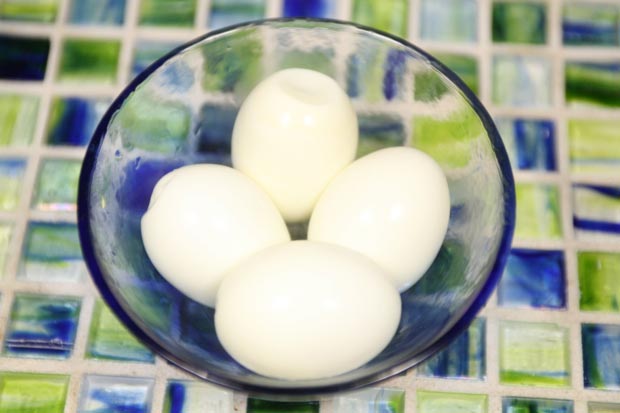
How to peel hard boiled eggs without losing half the white comes down to two things: over-salt the water, then flush the eggs with cold while the pot is still hot. Hard boiled eggs are an easy Low Carb snack to keep on hand, when you can get them out of the shell.
Okay I know everyone has their preferred technique to cook hard boiled eggs, well this is my easy way. I know first hand how much of a pain they can be to peel from their shell. I have tried everything from placing the eggs in an immediate ice bath to letting my eggs get older. Well I woke up one morning in the mood for a warm hard-boiled egg. I didn't care that my eggs were fresh, I figured I would just have to lose a little egg white in the process. So I simply boiled them in salty water for 20 minutes while I took a shower and got ready for work. Then I poured cold tap water over the eggs and continued to pour out the boiling water at the same time until the water was cold enough that I could reach in and grab an egg without burning my hand. Tapped the egg on all sides and the shell came off completely clean. Since then this has been my technique whether I want to eat them hot or cold.
Why the shell sticks
The biggest reason an egg fights you is that it is too fresh. A just-laid egg has a lower pH, and that acidity makes the white cling tight to the inner membrane and the shell. Let eggs sit in the fridge for a week or so and the pH rises, the bond loosens, and they peel far easier. The other lever is temperature shock. Cooling the eggs fast, the way my cold-water flush does, contracts the egg inside the shell and helps the membrane release, which is why the shell taps off in big clean pieces. Steaming the eggs instead of boiling does the same job even more gently. The salt is my own habit, and since it does not change the taste, there is no reason not to.
My easy method, step by step
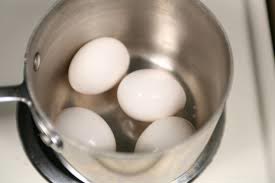
Place as many eggs as you need in an appropriately sized pot, with space between each one. Old or fresh, they all work with this method.
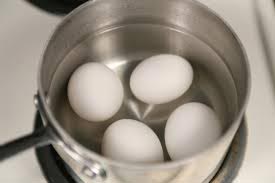
Cover with cold tap water by at least 1 inch.
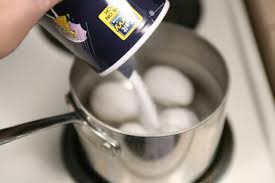
Over-salt the water. Even when you think it is plenty, add more, at least three tablespoons. It will not affect the taste.
Bring the water to a boil over high heat.
Turn the heat down to medium-high, enough to keep the eggs bouncing in the water.
After 20 minutes, take the pot off the stove and pour cold tap water over the eggs while pouring out the boiling water at the same time.
Keep flushing until the water is cool enough to reach in and lift out an egg that is also cool enough to touch.
Leave the eggs submerged in the cold water until you crack them.
Tap the shell, roll the egg in your hands, and the shell comes away clean.
A bowl of these is one of the easiest grab-and-go picks in my low carb snacks guide.
Sources:
USDA FoodData Central, nutrient reference for eggs
Sugarfreechic test kitchen, hard boiled egg peeling notes
Frequently asked questions
Why are my hard boiled eggs so hard to peel?
Usually the eggs are too fresh. A fresh egg has a lower pH, so the white grips the inner membrane. Let eggs sit a week in the fridge, or shock them cold right after cooking, and the shell lets go.
Does adding salt to the water help peeling?
Salt is my trick and it does not change the taste, so over-salting costs nothing. The bigger levers are egg age and a fast cold-water shock right after cooking, which is what actually separates the membrane.
What is the cold-water flush?
Pour cold tap water into the hot pot while draining the boiling water at the same time, until it is cool enough to reach in. The sudden cooling contracts the egg and helps it pull away from the shell.
Should I boil or steam eggs for easy peeling?
Both work. Steaming is gentler on the shell and many cooks find it peels even more cleanly, since the egg sets without knocking around the way it does at a rolling boil.
Featured in these guides
Curated low-carb guides and roundups this recipe is part of.